
Why in News?
Iran's Islamic Revolutionary Guard Corps (IRGC) claimed to have destroyed a US early-warning radar in Bahrain in a retaliatory strike following a US attack on a telecommunications tower in Sirik, southern Iran.
The incident has intensified tensions between Iran and the US in the Persian Gulf, particularly over maritime security and control of the Strait of Hormuz.
Key Developments
- IRGC's claim: Iran claimed that it targeted and destroyed a US early-warning radar facility in Bahrain.
- US response: US Central Command (CENTCOM) denied the destruction of the radar and stated that it had intercepted two one-way attack drones launched towards Bahrain.
- Iran's warning: The IRGC described the strike as a warning against what it called US interference, air operations and oil smuggling in the Strait of Hormuz.
- US military action: The US had recently conducted defensive airstrikes in southern Iran to neutralise IRGC threats to maritime traffic.
- Military escalation: Iranian officials warned of further strikes against US or Israeli forces in response to additional military actions.
Why Is Bahrain Strategically Important?
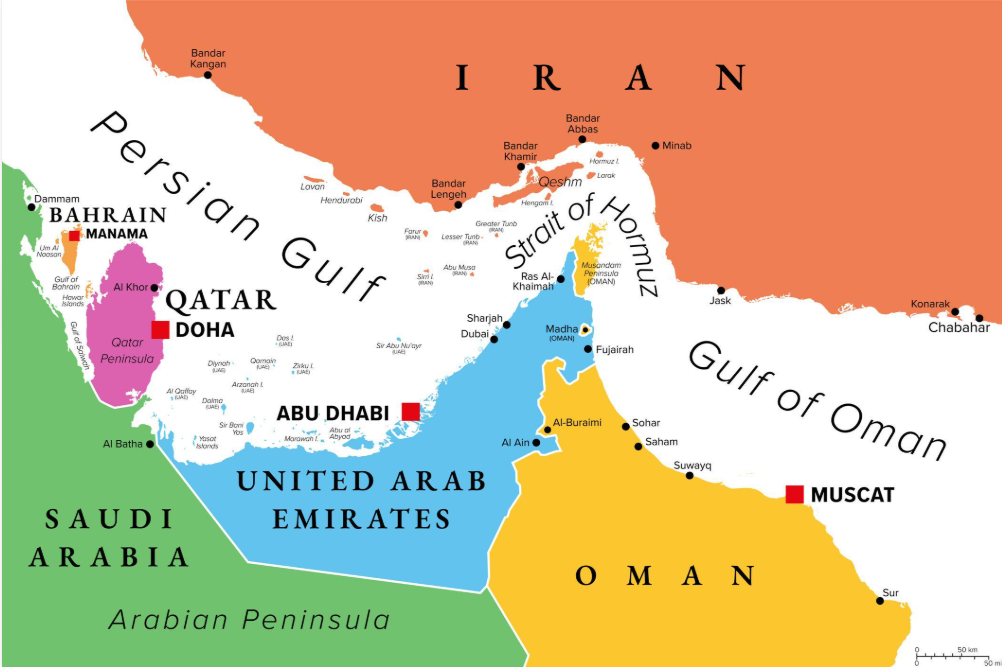
- Bahrain hosts the headquarters of the US Naval Forces Central Command (NAVCENT) and the US Fifth Fleet.
- Its geographical location in the Persian Gulf makes it strategically important for US naval operations and maritime security.
- The presence of US military infrastructure makes Bahrain significant in any escalation involving Iran and the US.
Strategic Importance of the Strait of Hormuz
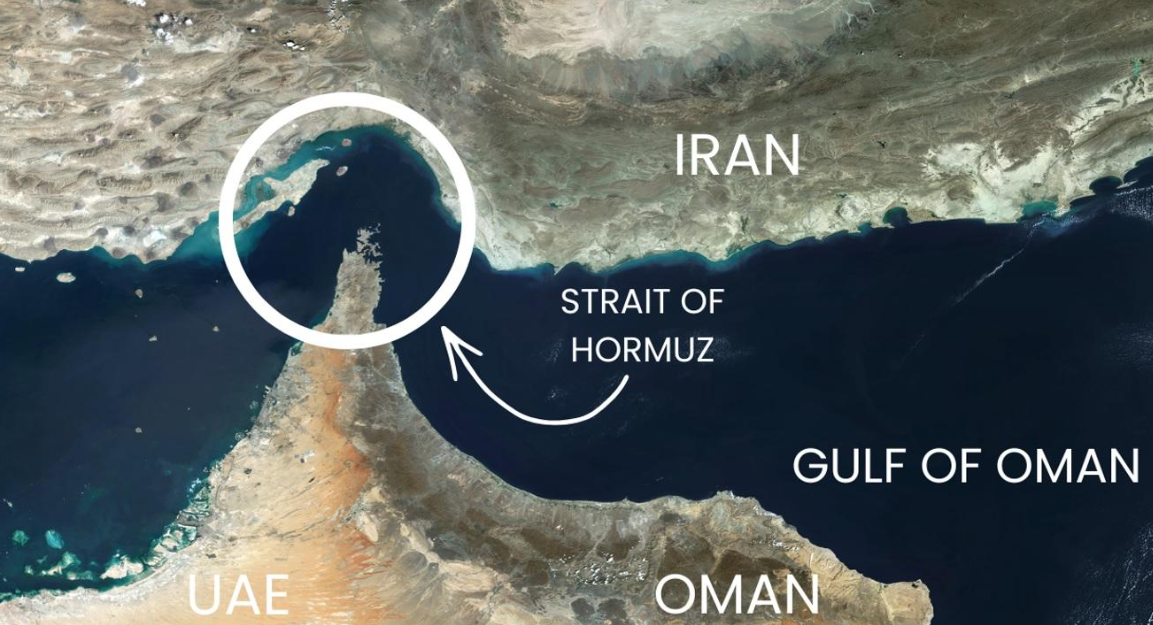
- Location: A narrow maritime passage connecting the Persian Gulf with the Gulf of Oman and the Arabian Sea.
- Geography: Lies between Iran to the north and Oman and the UAE to the south.
- Energy security: Approximately one-fifth of global oil shipments pass through this strategic chokepoint.
- Global trade: It is a critical route for international petroleum and liquefied natural gas (LNG) transportation.
- Strategic vulnerability: Any military confrontation or disruption in the strait can affect global energy supplies, shipping costs and oil prices.
Conclusion
The Iran–US confrontation highlights the strategic importance of the Strait of Hormuz in global energy security and maritime trade. Any disruption in this region can have consequences far beyond West Asia, particularly for energy-importing countries such as India. Ensuring freedom of navigation, maritime security and diplomatic de-escalation remains essential.
More current affairs of 14 November 2026
- Critical Minerals: India Bans Export of Lithium-Ion Battery Black Mass
- Samudrayaan Project: Matsya-6000 Deep-Ocean Submersible
- Prime Minister’s Awards for Excellence in Public Administration 2026
- Iran–US Tensions: IRGC Claims Attack on US Radar in Bahrain
- Monetary Policy and Inflation: Limitations of Interest Rate Hikes
- SUPER ICE Missile: Israel’s Long-Range Cruise Missile